
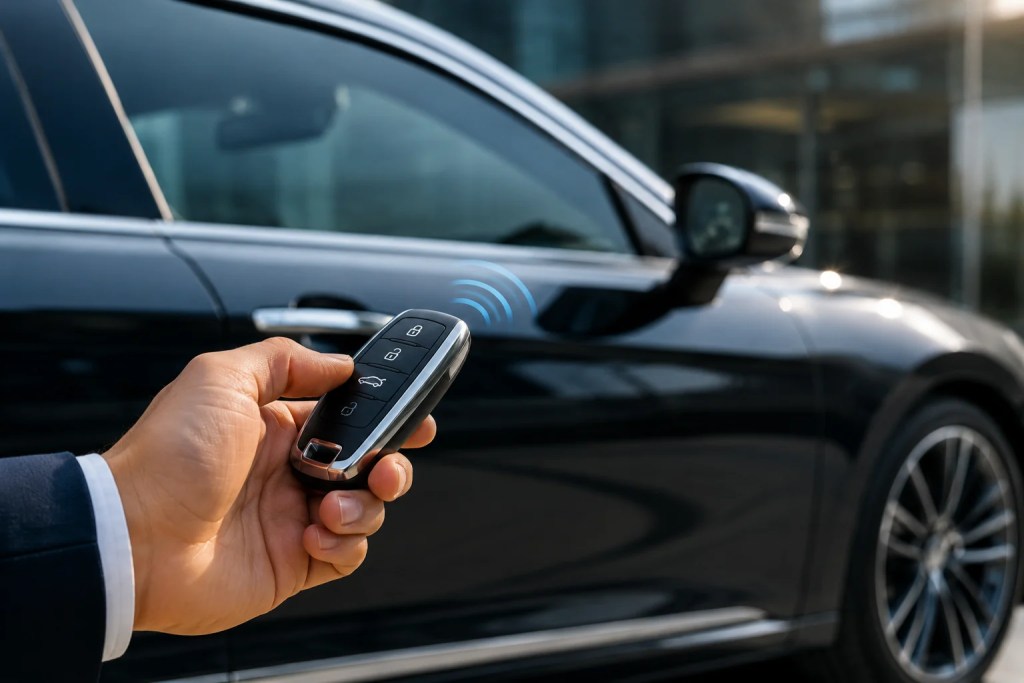
Modern vehicle theft is increasingly focused on electronic security rather than simply forcing open a door or breaking a steering lock. Key cloning, relay attacks and other forms of electronic access have made additional vehicle security increasingly relevant for UK drivers.
One of the main features that makes the Ghost Immobiliser different from many traditional immobilisers is its use of a personalised driver authentication sequence.
So, how do Ghost Immobiliser PIN Codes actually work?
Instead of requiring an additional remote control or visible keypad, the system uses selected buttons already found inside the vehicle. The driver enters their personalised sequence after switching on the ignition. Once the correct sequence has been recognised, the vehicle can be driven normally. Autowatch describes Ghost-II as a covert CAN-bus immobiliser using a personalised disarm sequence through the vehicle’s existing controls.
What Are Ghost Immobiliser PIN Codes?
Ghost Immobiliser PIN Codes are personalised button sequences used to authenticate an authorised driver before the vehicle can be driven.
Unlike a conventional PIN entered into a separate keypad, the sequence is entered using compatible factory buttons within the vehicle. Depending on the vehicle, these may include steering-wheel, dashboard or other existing controls.
The important concept is that the Ghost system adds an additional authentication step between getting into the vehicle and driving away.
Autowatch states that the Ghost-II disarm procedure involves turning the ignition on, entering the unique sequence and waiting for confirmation flashes before starting and driving normally.
How Do Ghost Immobiliser PIN Codes Work?
The process is designed to be straightforward for the authorised owner.
Step 1: Enter the Vehicle
The driver enters the vehicle and uses the normal factory key or keyless system as usual.
Step 2: Switch on the Ignition
The ignition is switched on, but the Ghost immobilisation requirement remains active.
Step 3: Enter the Personalised Sequence
The driver uses the pre-selected vehicle controls to enter their secret sequence.
Step 4: System Authentication
The immobiliser checks whether the correct sequence has been entered.
Step 5: Confirmation
On Ghost-II, Autowatch specifies two confirmation flashes after the correct sequence is entered.
Step 6: Start and Drive
Once authorised, the vehicle can be started and driven normally.
This process gives the vehicle an additional driver-authentication layer rather than relying entirely on the factory key or keyless system.
7 Powerful Benefits of Ghost Immobiliser PIN Codes
1. Creates an Additional Authentication Layer
One of the biggest benefits of Ghost Immobiliser PIN Codes is that they introduce another security requirement.
A thief may obtain access to a vehicle through methods such as key cloning or relay attacks, but the Ghost system still requires the authorised sequence before normal driving can take place.
This makes the PIN an important part of the system’s overall security architecture.
2. Uses Existing Vehicle Controls
Ghost-II does not require a conventional separate keypad for normal PIN entry.
Instead, Autowatch explains that the driver enters the personalised sequence using the vehicle’s own buttons.
This keeps the installation discreet and avoids adding an obvious security device to the dashboard.
3. No Additional Key Fob for PIN Operation
Another useful feature is that the standard Ghost-II authentication process does not depend on carrying an extra RF key fob.
Autowatch specifically describes Ghost-II as having no extra key fobs or LEDs for its standard operation, using the vehicle’s existing controls instead.
This is particularly relevant when considering security against wireless attacks.
4. The PIN Can Be Personalised
The owner can choose a sequence that is practical to remember but difficult for another person to guess.
Autowatch states that the Ghost-II sequence can be changed.
Changing the sequence can therefore be useful when ownership changes, the PIN has been disclosed or an owner simply wants to update their security credentials.
5. It Is Discreet
Traditional aftermarket security equipment can sometimes reveal that a vehicle has been modified.
Ghost is designed as a covert system with no standard visible LED or additional control pad for the normal PIN process.
That makes the authentication method less obvious to somebody sitting inside the vehicle.
6. It Complements Factory Security
A Ghost Immobiliser is not intended to replace the vehicle’s existing security architecture.
Instead, it provides an additional immobilisation and authentication layer. Thatcham Research describes vehicle security as encompassing both physical protection and digital resilience, including protection against emerging attack methods.
This layered approach is especially relevant for modern electronically controlled vehicles.
7. It Helps Protect Against Modern Theft Techniques
Autowatch markets its Ghost systems as protection against threats including key cloning and relay theft.
The PIN itself is important because the vehicle requires an intentional driver-authorisation action rather than relying exclusively on possession of the factory key.
Why Is the PIN Important for Vehicle Security?
The PIN is effectively the driver’s authentication credential.
Consider a simple comparison:
| Security Approach | Main Authentication |
|---|---|
| Standard key system | Physical key |
| Keyless entry | Electronic key/fob authentication |
| Traditional keypad immobiliser | Separate keypad PIN |
| Ghost Immobiliser | Personalised sequence using existing vehicle controls |
This does not mean a Ghost PIN should be treated like an online password. It is part of a vehicle immobilisation system and its exact operation depends on the installed system and vehicle.
The key benefit is that the immobilisation requirement can remain in place even after a person has gained physical access to the car.
What Makes a Strong Ghost Immobiliser PIN?
A good sequence should be memorable for the authorised driver but difficult for someone else to predict.
Avoid choosing an obvious pattern based on information someone could easily associate with you, such as:
- Your date of birth
- Your registration number
- A simple repeated button pattern
- An easily observed sequence
- A sequence shared with other people unnecessarily
The goal is to make the authentication sequence personal without making it predictable.
Because the precise available button combinations depend on the vehicle and installed system, the installer should guide the owner through the appropriate setup process.
Can You Change Ghost Immobiliser PIN Codes?
Yes. Autowatch states that Ghost-II allows the personalised sequence to be changed.
Changing the PIN can be sensible when:
- You believe somebody has learned the existing sequence.
- The vehicle has changed ownership.
- You have shared the sequence with too many people.
- You want to refresh your security.
- You no longer find the current sequence easy to remember.
Always follow the manufacturer’s or approved installer’s procedure for changing the sequence rather than attempting unverified methods.
What Happens If You Enter the Wrong PIN?
The key purpose of driver authentication is to distinguish an authorised driver from an unauthorised attempt.
If the correct sequence is not entered, the Ghost immobilisation requirement remains active. The precise behaviour can depend on the system version and vehicle configuration.
For this reason, owners should use the instructions supplied with their installation rather than relying on generic online advice.
It is also worth remembering that the PIN should remain confidential. Sharing it widely reduces the benefit of having a personalised authentication step in the first place.
Ghost Immobiliser PIN Codes vs Traditional Car Keys
A factory key primarily establishes that the vehicle’s electronic or mechanical access system recognises the key.
Ghost adds another layer.
| Feature | Factory Key | Ghost PIN |
|---|---|---|
| Physical device | Usually required | Not required for PIN entry |
| Wireless authentication | Vehicle dependent | No additional RF fob required for normal PIN operation |
| Driver input | Usually key/fob based | Existing vehicle controls |
| Personalised sequence | Usually no | Yes |
| Extra security layer | Factory dependent | Yes |
| Covert operation | Not applicable | Designed to be discreet |
The two systems can therefore work together rather than being mutually exclusive.
Are Ghost Immobiliser PIN Codes Easy to Guess?
They should not be treated as something that can simply be guessed from the vehicle registration or owner’s personal information.
The purpose of a personalised sequence is to provide a secret authentication step known by the authorised driver.
However, security depends partly on user behaviour. Sharing the PIN, choosing an obvious pattern or allowing somebody to watch the entry sequence could reduce the practical benefit.
For the strongest result, treat the sequence as confidential vehicle-security information.
Ghost Immobiliser PIN Codes and CAN Bus Security
Ghost-II is designed as a CAN-bus immobiliser, meaning it integrates with the vehicle’s internal electronic network.
This is particularly relevant because modern vehicle security now has to consider both conventional theft and digital attack methods. Thatcham Research says its vehicle security work considers digital vulnerabilities, keyless-entry protection and emerging attack methods.
The Ghost PIN therefore functions as part of an electronic immobilisation strategy rather than simply acting as a visible deterrent.
Does Ghost Immobiliser Have a Service or Valet Mode?
Yes. Ghost-II includes a Service/Valet mode designed for situations such as workshops and vehicle handovers.
This is useful when the vehicle needs to be operated by someone who does not have the owner’s normal driving authentication sequence.
Autowatch states that Service/Valet mode temporarily suspends the disarm requirement while the vehicle is in a workshop, and the owner’s sequence can be used to exit the mode.
Owners should understand how this feature works before handing the vehicle to a garage.
Is a Ghost Immobiliser PIN Better Than a Steering Lock?
They serve different purposes.
A steering lock is a physical security device that creates a visible barrier to steering the vehicle.
A Ghost Immobiliser provides electronic driver authentication.
For higher-risk vehicles, using both can create a layered strategy:
Physical deterrent + electronic immobilisation + tracking
The most appropriate combination depends on the vehicle, location, theft risk and insurance requirements.
Is Ghost Immobiliser Thatcham Approved?
This needs careful wording because Thatcham certification is product-specific.
Thatcham Research operates certification categories for aftermarket vehicle-security products, including electronic immobilisers and tracking systems. Its certification programme evaluates security, functionality, safety and reliability against defined criteria.
However, Thatcham also states that certification does not automatically guarantee insurer recognition. Insurer recognition is negotiated separately between manufacturers and insurers.
Therefore, UK vehicle owners should confirm their exact product and insurance requirements with their insurer.
How to Keep Your Ghost Immobiliser PIN Secure
Your PIN is part of your vehicle’s security, so it should be treated accordingly.
Do not write it on a note inside the car.
Avoid sharing it with unnecessary people.
Do not choose an obvious sequence.
Change it when you have concerns about who knows it.
Be cautious when entering the sequence around unfamiliar people.
Make sure you understand Service/Valet mode before using it.
Keep the installation and ownership documentation in a secure place.
These simple habits can help preserve the practical benefit of the authentication system.
Is a Ghost Immobiliser PIN Worth Having in the UK?
For drivers concerned about modern vehicle theft, the main advantage of Ghost Immobiliser PIN Codes is the extra authentication step they add to an already electronically secured vehicle.
Ghost-II is designed to use a personalised sequence through the vehicle’s existing controls, without requiring an additional RF key fob for the normal disarm process.
It is not a guarantee that a vehicle can never be stolen. Instead, it should be considered one component of a layered security strategy.
Combining appropriate electronic immobilisation with physical security, sensible key management and tracking where appropriate can provide more comprehensive protection.
Final Verdict on Ghost Immobiliser PIN Codes
Ghost Immobiliser PIN Codes are central to the driver-authentication process of the Ghost-II system.
The concept is simple: switch on the ignition, enter your personalised sequence using the vehicle’s existing controls, receive confirmation and then drive normally.
The security value comes from adding an additional authorisation requirement that is separate from simply having access to the vehicle’s factory key.
For UK drivers looking for discreet aftermarket protection, a professionally installed Ghost Immobiliser can therefore provide an additional layer of electronic security. As with any vehicle-security product, compatibility, installation quality and correct use remain important.
FAQs About Ghost Immobiliser PIN Codes
What are Ghost Immobiliser PIN Codes?
They are personalised button sequences used to authenticate an authorised driver before the Ghost system allows normal vehicle operation.
How do I enter a Ghost Immobiliser PIN?
With Ghost-II, the sequence is entered using compatible existing vehicle controls after switching on the ignition. Autowatch states that the correct sequence is followed by two confirmation flashes before the vehicle can be driven.
Can I change my Ghost Immobiliser PIN?
Yes. Autowatch states that the Ghost-II personalised sequence can be changed.
Does the Ghost PIN replace my car key?
No. The Ghost Immobiliser adds an additional authentication layer and works alongside the vehicle’s existing factory access system.
Does Ghost Immobiliser require another key fob?
Ghost-II’s standard PIN operation does not require an additional RF key fob.
Can someone see my Ghost PIN?
The PIN is entered through existing vehicle controls, so good security practice is important. Avoid entering it where someone can easily observe your button sequence.
What happens if I forget my Ghost PIN?
Use the documentation and support process supplied with your installation. Avoid relying on unofficial reset instructions because procedures can vary by system and vehicle.
Does the Ghost Immobiliser protect against key cloning?
Autowatch markets Ghost as protection against key cloning and relay theft.
Is Ghost-II suitable for every vehicle?
No. Compatibility varies by make, model and electronic architecture, so the exact vehicle should be checked before installation.
Follow us on instagram.